Your cart
Your cart is empty
Continue shopping
Drawer menu
All Guides
Choosing the right sink for your kitchen can transform both its functionality and appearance. Undermount sinks, installed beneath the countertop, offer a sleek, modern look while maximizing countertop space. This makes them an excellent...

Choosing the right sink for your kitchen can transform both its functionality and appearance. Undermount sinks, installed beneath the countertop, offer a sleek, modern look while maximizing countertop space. This makes them an excellent choice for compact kitchens. Drop-in sinks, on the other hand, rest on the countertop and are easier to install, making them a budget-friendly option. Each type has unique benefits, but for a small kitchen sink, space efficiency often becomes a deciding factor. Understanding these differences will help you make an informed decision.
An undermount sink is installed beneath the countertop, creating a seamless transition between the sink and the counter. This design eliminates the visible rim, giving your kitchen a sleek and modern appearance. The installation process requires precision, as the sink must be securely mounted to the underside of the countertop. Professionals often recommend this type of sink for solid surface materials like granite, quartz, or marble due to its compatibility with these sturdy countertops.
The absence of a rim not only enhances the aesthetic appeal but also simplifies cleaning. You can easily wipe crumbs and spills directly into the sink without encountering any obstructions. However, installing an undermount sink demands expertise and specialized tools, making professional assistance a common choice for homeowners.
Undermount sinks are a game-changer for compact kitchens. By sitting below the countertop, they free up valuable counter space, making your kitchen feel more open and functional. This design also allows you to maximize every inch of your workspace, which is crucial when dealing with a small kitchen sink. The streamlined look complements modern kitchen designs, adding a touch of elegance to even the smallest spaces.
A drop-in sink, also known as a top-mount sink, rests on the countertop with its rim providing support. The installation process is straightforward, making it an ideal choice for DIY enthusiasts. You simply place the sink into a pre-cut hole in the countertop, and the rim ensures stability. This design works well with a variety of countertop materials, including laminate, which may not support the weight of an undermount sink.
Drop-in sinks are widely available in numerous styles and sizes, offering flexibility for homeowners. Their visible rim adds a classic touch to your kitchen, making them suitable for traditional or transitional designs. Additionally, replacing a drop-in sink is hassle-free, as it doesn’t require altering the countertop or plumbing.
For budget-conscious homeowners, drop-in sinks provide an affordable and practical solution. They are easy to install and replace, saving you time and money. The rim of the sink protects the edges of the countertop cutout, which is especially beneficial for softer materials. While they may take up slightly more counter space than undermount sinks, their versatility and ease of use make them a popular choice for small kitchen sinks.
When it comes to installation, undermount sinks demand precision. You need specialized tools and adhesives to securely mount the sink beneath the countertop. This process often requires professional assistance, especially if you are working with heavy materials like granite or quartz. The seamless integration of an undermount sink adds sophistication but increases the complexity of the installation.
In contrast, drop-in sinks offer a straightforward installation process. You simply place the sink into a pre-cut hole in the countertop, and the rim provides stability. This simplicity makes drop-in sinks a popular choice for DIY enthusiasts. You won’t need advanced tools or professional help, which can save both time and money.
If you enjoy tackling home improvement projects yourself, a drop-in sink is the better option. Its design allows for easy placement and minimal adjustments. You can install it without extensive experience or specialized skills. On the other hand, undermount sinks are less suitable for DIY projects due to their intricate installation requirements. Attempting to install one without proper knowledge could lead to alignment issues or damage to your countertop.
Drop-in sinks are generally more affordable than undermount sinks. Their simpler design and wide availability contribute to their lower price point. If you are working within a tight budget, a drop-in sink provides a cost-effective solution without compromising functionality. Undermount sinks, however, tend to cost more due to their sleek design and premium appeal.
The installation costs for undermount sinks are higher because they often require professional labor. This additional expense can make them less appealing if you are looking to minimize upfront costs. However, their seamless design and space-saving benefits can add long-term value to your kitchen, especially in compact spaces.
Drop-in sinks, with their easy installation, incur lower labor costs. They are also easier to replace, which can save you money in the future. While they may not offer the same upscale appearance as undermount sinks, their affordability and practicality make them a smart choice for many homeowners.
Undermount sinks simplify cleaning by eliminating the rim where dirt and grime can accumulate. You can easily wipe crumbs and spills directly into the sink, making it a convenient option for maintaining a tidy kitchen. However, the area where the sink meets the countertop requires regular attention to prevent mold or mildew buildup.
Drop-in sinks, with their visible rim, can be slightly harder to clean. Dirt and debris may collect around the edges, requiring extra effort during cleaning. Despite this, their durable design ensures they remain functional and easy to maintain over time.
Both sink types offer excellent durability, but their longevity depends on the materials used. Undermount sinks, when installed correctly, provide a sturdy and long-lasting solution. Their seamless design reduces the risk of wear and tear around the edges. Drop-in sinks, while equally durable, may show signs of wear around the rim over time. Regular maintenance can help preserve their appearance and functionality.
In a small kitchen, every inch of countertop space matters. Undermount sinks excel in this area by sitting below the countertop surface. This design eliminates the rim, providing a smooth and uninterrupted workspace. You can use the extra counter space for food preparation or organizing kitchen essentials, which is especially valuable when working with a small kitchen sink.
Drop-in sinks, while practical, take up slightly more countertop space due to their visible rim. The rim creates a boundary that can limit the usable area around the sink. However, their straightforward installation and protective design make them a viable option for kitchens where countertop space is less of a concern.
Compact kitchen layouts demand efficient use of space, and undermount sinks deliver on this front. Their streamlined design not only maximizes countertop space but also simplifies cleaning. You can easily sweep crumbs and spills directly into the sink, keeping your kitchen tidy and functional. This practicality makes undermount sinks a popular choice for small kitchens.
Drop-in sinks, despite their slightly larger footprint, remain a practical option for compact layouts. Their ease of installation and compatibility with various countertop materials make them a convenient choice for homeowners. If you prioritize affordability and versatility, a drop-in sink can still meet your needs without overwhelming your kitchen’s layout.
Undermount sinks offer a sleek and modern design that enhances the overall look of your kitchen. By being installed beneath the countertop, they create a seamless transition between the sink and the counter. This design eliminates the visible rim, making cleaning easier. You can simply wipe crumbs and spills directly into the sink without any obstructions. This feature proves especially useful in a small kitchen, where maintaining a tidy and functional space is essential.
The space-saving benefits of undermount sinks make them an excellent choice for compact kitchens. Since the sink sits below the countertop, it frees up valuable surface area. This extra space can be used for food preparation or organizing kitchen essentials. The clean lines and uninterrupted countertop also contribute to a more open and spacious feel, even in the smallest of kitchens.
Additionally, undermount sinks pair well with solid surface countertops like granite, quartz, or marble. These materials provide the strength needed to support the sink’s weight, ensuring a secure and durable installation. The combination of functionality and aesthetics makes undermount sinks a popular choice for homeowners seeking a modern and efficient solution for their small kitchen sink.
Drop-in sinks, also known as top-mount sinks, provide a practical and affordable option for homeowners. Their straightforward installation process makes them ideal for DIY enthusiasts. You can place the sink into a pre-cut hole in the countertop, and the rim provides stability. This simplicity reduces labor costs and eliminates the need for professional assistance, saving you money.
The versatility of drop-in sinks is another advantage. They work well with a variety of countertop materials, including laminate and wood. The rim protects the edges of the countertop cutout, making them a durable choice for softer surfaces. This compatibility allows you to choose a sink that fits your budget and complements your kitchen’s design.
While drop-in sinks may take up slightly more countertop space due to their visible rim, they remain a practical option for small kitchens. Their affordability and ease of replacement make them a smart choice for homeowners looking to balance cost and functionality. The classic and timeless look of drop-in sinks also ensures they fit seamlessly into various kitchen styles, from traditional to transitional.
When selecting a sink for your small kitchen, space efficiency becomes a top priority. Every inch of countertop space matters, and the sink you choose should complement your kitchen’s layout. Undermount sinks excel in this area by sitting beneath the countertop, creating a seamless surface that maximizes usable space. This design is especially beneficial for compact kitchens where clutter-free counters are essential.
Countertop compatibility also plays a significant role in your decision. Undermount sinks pair best with solid surface materials like granite, quartz, or marble, as these sturdy countertops can support the sink’s weight. Drop-in sinks, however, offer greater flexibility. They work well with a variety of materials, including laminate and wood, making them a practical choice if your countertop cannot accommodate the weight or installation requirements of an undermount sink.
Your budget and installation preferences will heavily influence your choice. If you aim to minimize costs, drop-in sinks provide an affordable solution. Their straightforward installation process allows you to save on labor expenses, making them ideal for DIY enthusiasts.
On the other hand, undermount sinks often require professional installation due to their precise mounting process. While this may increase upfront costs, the sleek design and long-term value they add to your kitchen can make them a worthwhile investment. If you prioritize a modern aesthetic and enhanced functionality, undermount sinks are an excellent choice.
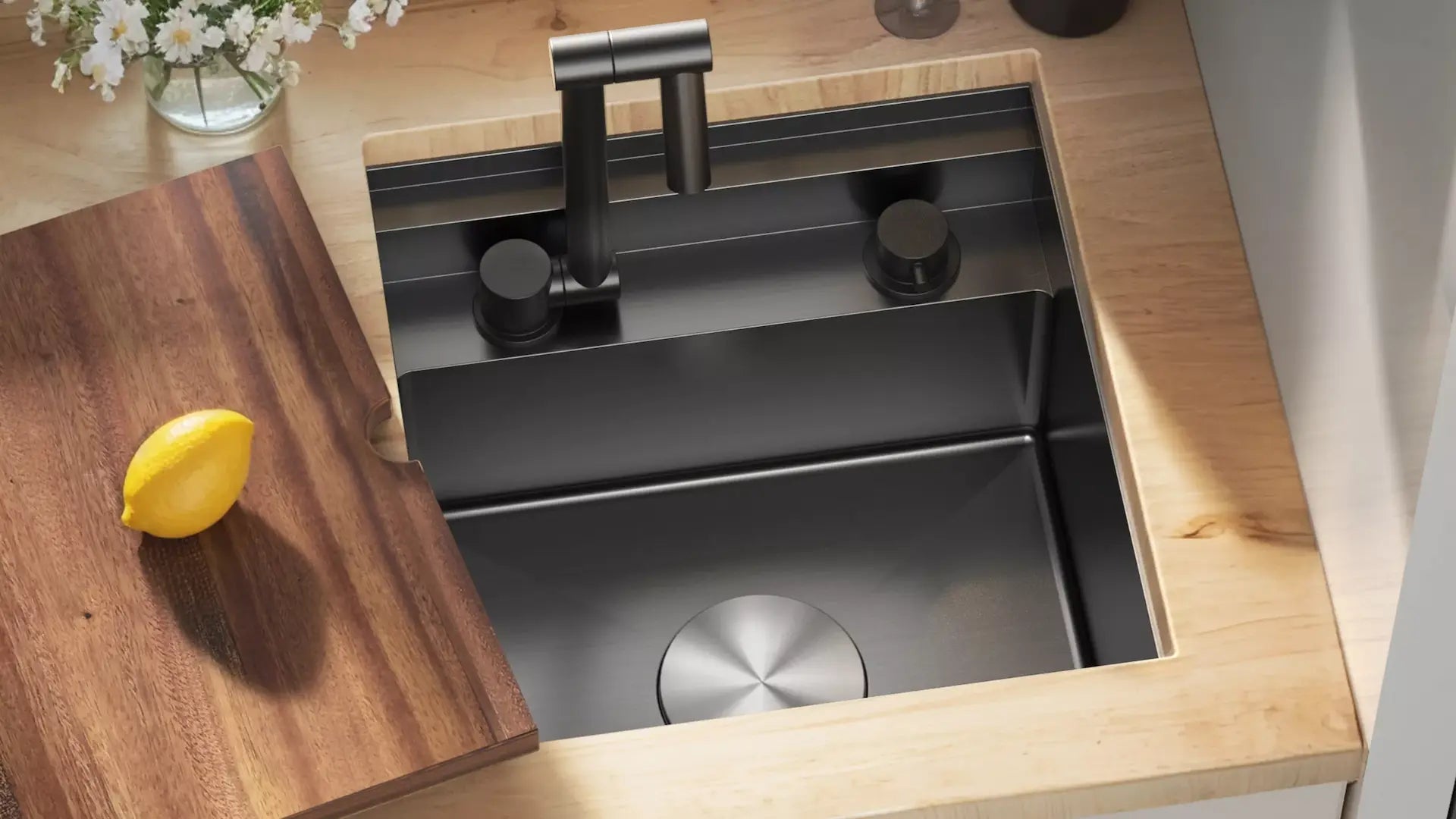
In small kitchens, multifunctionality is key. Torva understands this need and offers sinks equipped with innovative features that maximize efficiency. Many of Torva’s small kitchen sink models include built-in accessories such as cutting boards, colanders, and drying racks. These additions transform your sink into a versatile workstation, allowing you to prep, cook, and clean in one convenient location.
The inclusion of these features helps you maintain an organized and clutter-free kitchen. For example, a built-in cutting board lets you chop vegetables directly over the sink, saving counter space and simplifying cleanup. Similarly, integrated drying racks provide a designated area for dishes, keeping your counters clear and tidy. With Torva’s multifunctional sinks, you can turn even the smallest kitchen into a powerhouse of efficiency.
Both undermount and drop-in sinks bring unique benefits to your kitchen. Undermount sinks, like the Torva 15 x 17 Inch Undermount Kitchen Sink, maximize countertop space and offer a sleek, modern design. Drop-in sinks, such as Torva Drop-in Kitchen Sinks, provide durability with premium 16-gauge stainless steel and are easy to install, making them a budget-friendly option. Your choice depends on your kitchen layout and priorities. Torva’s innovative designs ensure you get a high-quality sink that combines functionality with style, helping you create a more efficient and visually appealing small kitchen.
 RV Sinks: Types, Materials, and Buying ConsiderationsRV sinks are chosen under different constraints than residential kitchen sinks. The available cabinet space is smaller, the plumbing path is tighter, and the sink often...Read guide
 How to Choose a Sink and Faucet for Compact SpacesChoosing the right sink with faucet for compact spaces transforms how you use and enjoy your area. A well-selected combination enhances functionality while maintaining a stylish...Read guide
 Van Sink Space Planning GuideHaving a fully functional RV van can excite your journey, and one of the most crucial components to consider is your van sink space saving. Whether...Read guide
Starting from October our sinks no longer include the silicone pot mat accessory