Your cart
Your cart is empty
Continue shopping
Drawer menu
Sink Guides
RV sinks are chosen under different constraints than residential kitchen sinks. The available cabinet space is smaller, the plumbing path is tighter, and the sink often needs to work with a compact faucet, drain...
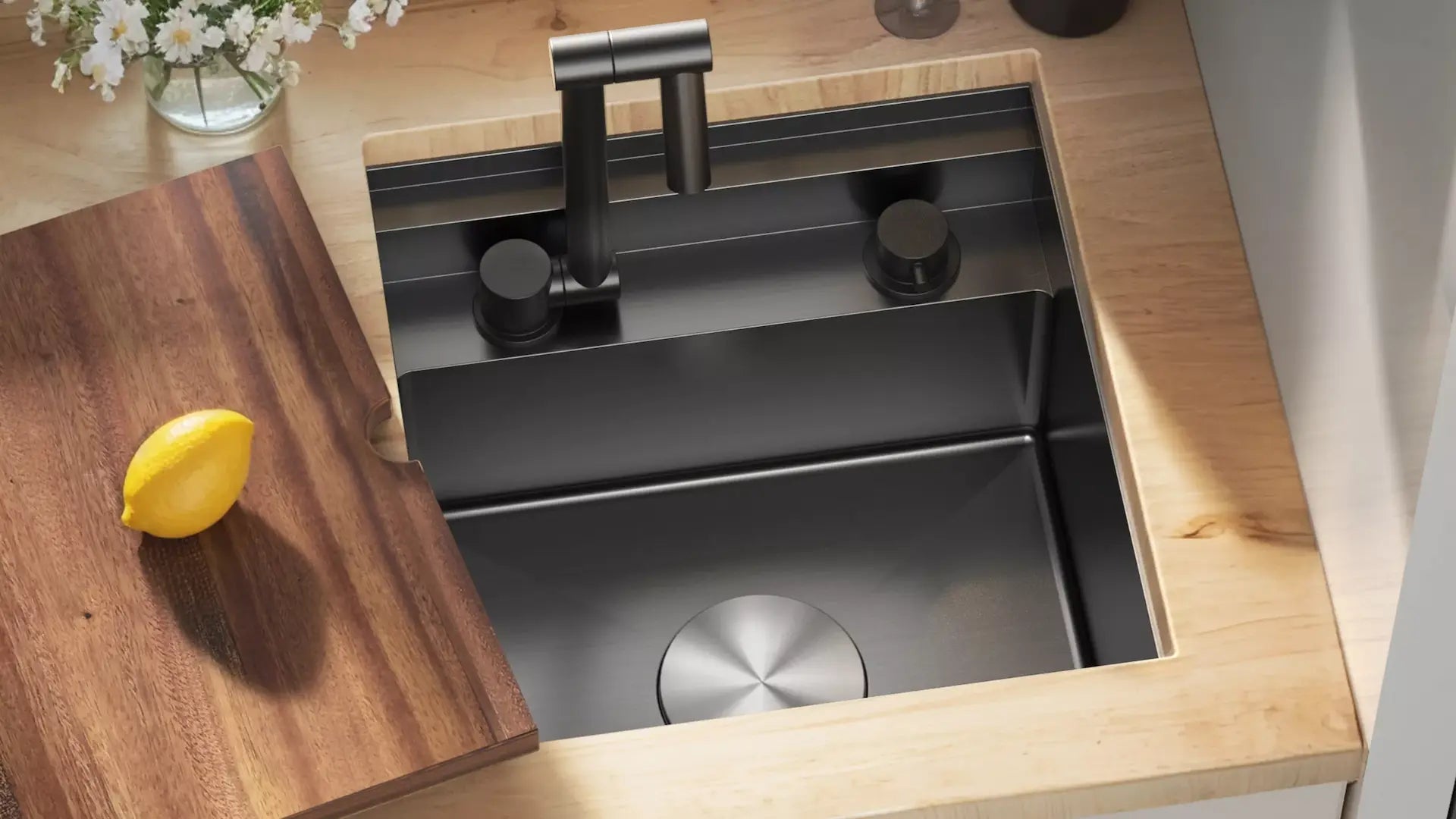
RV sinks are chosen under different constraints than residential kitchen sinks. The available cabinet space is smaller, the plumbing path is tighter, and the sink often needs to work with a compact faucet, drain kit, water tank, or travel-ready galley layout. This guide explains the main decisions to compare before choosing a sink for an RV kitchen, camper van, trailer, or other compact space.
An RV sink has to fit a moving, compact environment. The decision is not only about bowl shape. It includes counter cutout, cabinet width, bowl depth, faucet movement, drain clearance, and how easy the setup will be to clean or service later.
Drop-in sinks are often considered for straightforward installation or replacement projects. Undermount sinks can create a clean counter line when the build supports that style. Workstation sinks can add prep space through accessories. Compact sink and faucet layouts can help in tight galleys when the faucet movement is verified before installation.
RV sinks may use stainless steel, acrylic, plastic, composite materials, or other finishes depending on the project. Material affects cleaning, appearance, weight, and long-term wear. Check the current product page for the exact TORVA material, finish, and care details before choosing a model.
Measure first. Cabinet width, counter depth, cutout, counter thickness, under-sink clearance, and faucet movement should all be checked. If the build uses a cover, cutting board, foldable faucet, or nearby wall, confirm how the parts move together.
 How to Choose a Sink and Faucet for Compact SpacesChoosing the right sink with faucet for compact spaces transforms how you use and enjoy your area. A well-selected combination enhances functionality while maintaining a stylish...Read guide
 Van Sink Space Planning GuideHaving a fully functional RV van can excite your journey, and one of the most crucial components to consider is your van sink space saving. Whether...Read guide
 Undermount vs. Drop-In Sinks for Small KitchensChoosing the right sink for your kitchen can transform both its functionality and appearance. Undermount sinks, installed beneath the countertop, offer a sleek, modern look while...Read guide
Starting from October our sinks no longer include the silicone pot mat accessory